This profile looks great. You want to share it with everyone?
Wireless Bell Systems
User
School Bells Systems for Streamlined Individuals Circulation
SECTORES
About Wireless Bell Systems
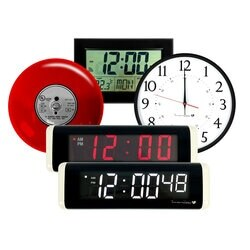
School bells systems have as a primary purpose helping with the transit of an entire trainee body from one classroom to an additional as effectively and efficiently as feasible. School bell systems keep all timekeeping systems in sync, consisting of all clocks, all bells, and other connected devices such as tone generators; furthermore, they persuade both wireless and hardwired channels. The principal network device is the master clock, itself integrated with an atomic or network clock, establishing the time for all other devices and issuing interactions to them as the demand develops.
School bells systems stemmed, as one could anticipate, in educational settings, and the paradigm still functions well there. However, the setup has actually shown valuable in various other applications too, gradually expanding out to broader settings over the years. They fit best in scenarios that require routine marking or announcing of events making use of distinct audios that are essentially binary (i.e., either on or off) messages.
Historically, bells have actually been made use of, going back centuries, to introduce public occasions to a whole area; examples are contacts us to praise and the knells of a funeral service. This type of communication is so reliable because hearing is seemingly one of the most delicate of the five senses, stemming from the demand to endure. Indeed, eyes can be closed reflexively in the presence of alarming sights, but ears can not react in the same way.
School bells duplicate this mass interaction approach in contemporary times, and they, too, are tough to overlook. Hearing buzzing via the halls informs students that they are currently "saved" from their current course and should head for their following one. They know that when the following bell sounds, they had much better go to their location, taking notice of the trainer.
Keep in mind the vital presumption of all bells across school appearing synchronously. Or else, some pupils will certainly leave class at a long time offset compared to others, placing them at a drawback; not only that, if the balanced out is simply a couple of nanoseconds, a disorienting echo can establish. So, systems require to acquire best synchrony, which gives the result of calling as one bell instead of many.
Bell ringing is a sort of binary code; the two states are ringing and silence, and which state is occurrent shares a straightforward message. If schools must communicate extra challenging campus-wide messages (e.g., upcoming occasion statements or information updates), distinct speech is normally used. This is achieved either by calling assembly or with intercoms, or public address () systems.
We can envision something in between, such as a code that has more than 2 states, though it would certainly be more practical to make use of tones or clicks instead of bell rings. Nonetheless, one can barely expect people to discover a somewhat arbitrary code, at the very least not to the level where the number of errors/mis-readings is negligible. The present plan appears to work finest: bells either on or off, and PA systems (speaking with people) to cover every little thing else.
The optimal means to complete synchrony is for the master clock to relay timing signals to all tools simultaneously, using either hardwired connections or cordless channels. The hardwired approach fits to be a lot more safe and secure and dependable, yet the expenses for setup and maintenance are high. Wireless transmissions can often have function or disturbance troubles, however boosted regulation of the medium has mostly gotten rid of these.
School bells do not have to be physical, and one sees modern-day systems incorporating synthetic tones as a replacement or augmentation. One can increase the sound language with this method, providing subtlety or splendor past the binary state info.
Such advanced growths use some flexibility in transferring employees or students from location to place in a much less turbulent and much more suiting way. We see after that a sort of development in using school bells systems for streamlined people circulation.
Image Gallery 1
